
Garbage Classification V2
Dataset containing nearly 20,000 images of waste divided into 10 distinct categories. Used to train object classification or detection models in the field of recycling and waste management.
Description
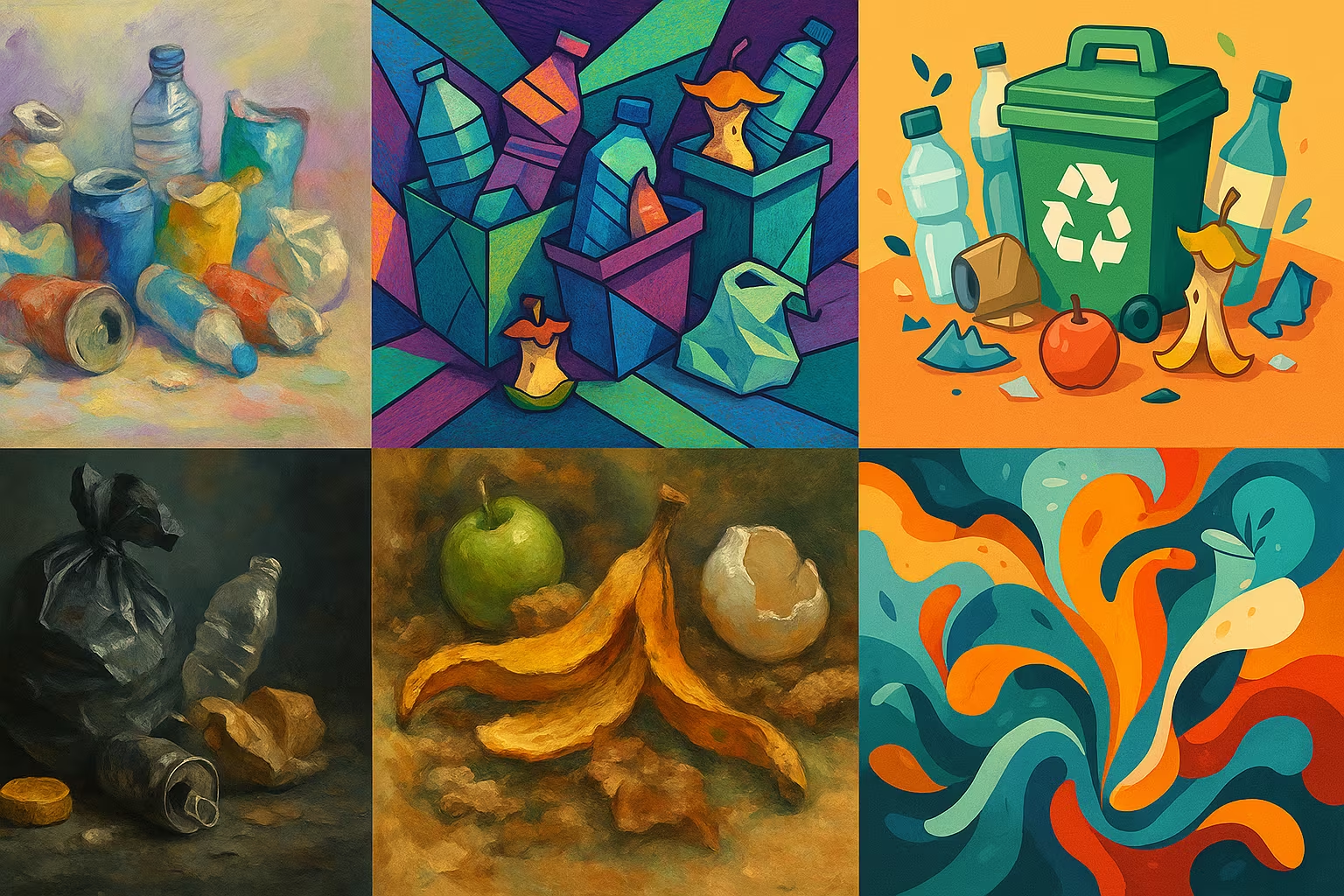
The dataset Garbage Classification V2 offers a set of 19,762 images divided into 10 distinct classes of waste, including metal, plastic, glass, and others. It is designed to facilitate the development of machine learning and computer vision models that target the classification of objects related to recycling and sustainable waste management.
What is this dataset for?
- Train image classification models to identify different types of waste
- Develop AI solutions for automated sorting in recycling systems
- Testing computer vision algorithms applied to waste management
Can it be enriched or improved?
Yes, it is possible to enrich this dataset by adding additional annotations such as bounding boxes for object detection, or by increasing the classes to better cover other types of waste. The quality of the images can also be improved by cleaning or filtering according to the context of use.
🔎 In summary
🧠 Recommended for
- Computer vision students
- Sustainable AI projects
- Developers of intelligent sorting solutions
🔧 Compatible tools
- TensorFlow
- PyTorch
- OpenCV
- LabelImg (for annotation)
💡 Tip
Use image augmentation techniques to improve the robustness of the model.
Frequently Asked Questions
Can this dataset be used for object detection or only for classification?
Originally designed for classification, it can be adapted for detection with additional annotations.
How diverse are the classes in this dataset?
The dataset contains 10 distinct classes of waste, covering metal, plastic, glass, paper, among others.
Is this dataset suitable for computer vision beginners?
Yes, it's well-organized and easy to use, ideal for learning the basics of image classification.